
In behavioral health, waiting is not neutral. Every hour a referral sits unanswered is an hour a patient in crisis stays in an emergency department, a bed stays empty, and risk climbs. On June 25 we hosted a free webinar on exactly this — the full recording is below, along with what it covers.
Watch the recording on YouTube →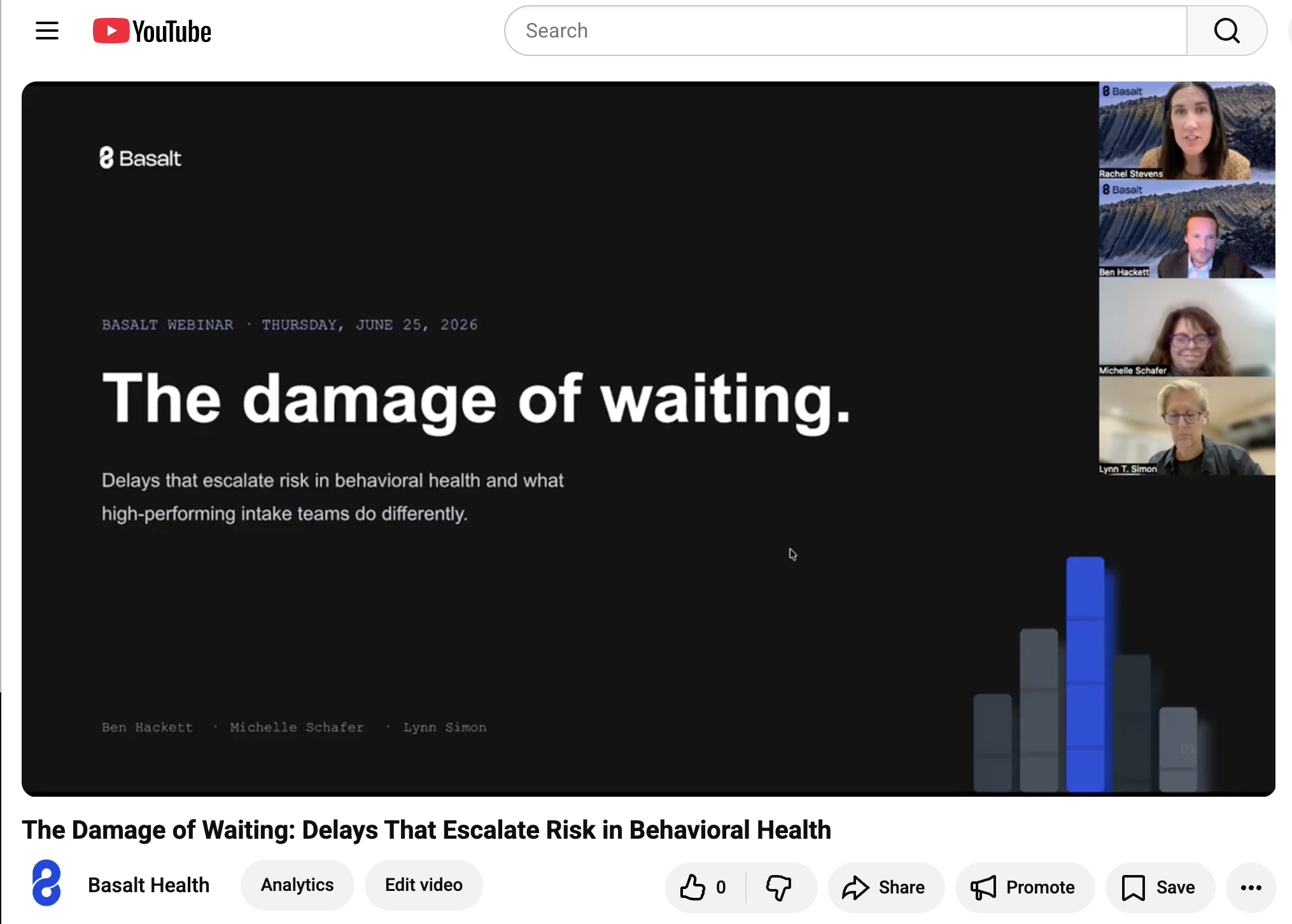
Short on time? The live product demo starts at 21:00.
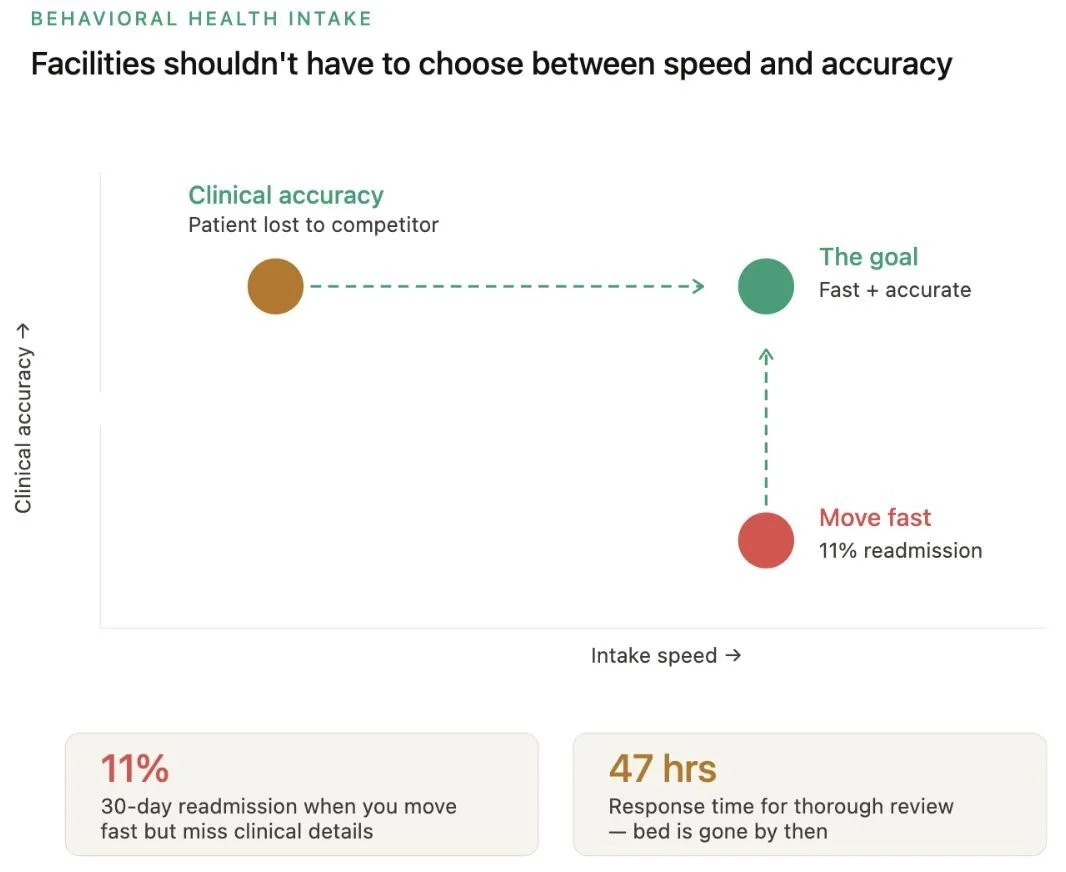
The intake desk is where behavioral-health access either works or breaks. A referral arrives, often as a faxed packet running dozens of pages, and a nurse or coordinator has to read it, weigh it against admission criteria, and respond. When that takes hours, the consequences compound: the patient waits in a setting that isn't built for them, the referring hospital starts calling other facilities, and the window to intervene narrows.
Waiting escalates clinical risk
Readmission is the clearest signal that the system moved too slowly. Roughly 11% of behavioral-health patients are readmitted within 30 days of discharge, and slow intake response is one of the levers that pushes that number higher. When a patient can't get placed quickly, gaps open in the continuity of their care, and those gaps are where deterioration happens.
The first responder wins the bed
Referral sources remember who answers. In practice, the facility that responds first captures the placement far more often than chance would suggest, by a margin of about 22%. Speed isn't just a courtesy to the patient; it's how a facility keeps its referral relationships and keeps its beds full. A slow desk quietly loses both.
Faster intake is possible
The encouraging part is that the bottleneck is fixable. AI-automated intake reads the full referral packet the moment it arrives, surfaces the clinical signal and the admission-criteria matches with citations, and cuts response time from 10+ hours to minutes. The human still makes the call, but they make it with the evidence in front of them, in time for it to matter.
In the webinar, we'll walk through what that looks like live, alongside panelists who've led behavioral-health systems and seen the cost of waiting firsthand.
The Damage of Waiting: Delays That Escalate Risk in Behavioral Health. The live session has concluded — the full 60-minute recording is available above, anytime.